Beginning again by remembering what time is for.
There are moments when a new season arrives and we assume the most important thing is to decide what we will do next. Tishrei invites a different question. What if the beginning of a year is not first about planning the future, but about returning our attention to God?
The Hebrew calendar gives us a beautiful tension. Nisan is called the first month in Exodus 12:2, because Israel's story of redemption begins there. Yet Tishrei carries the beginning of the civil year and gathers a remarkable sequence of sacred days , Rosh Hashanah, Yom Kippur, Sukkot, and the closing celebrations of the festival season.
The calendar itself teaches us that beginnings can have layers. There is the beginning of deliverance, the beginning of remembrance, and the beginning that comes when we stop and take account of the life we have been living.
- Tishrei is therefore not simply a month on a calendar. It becomes an invitation to notice how we are inhabiting time.
The truth is, we rarely experience time as neutral. Our nervous system is continually deciding what matters. Attention is filtered, memory is selected, and familiar patterns become easier to notice and repeat.
The brain is not simply recording our lives; it is helping construct what becomes salient within them. This is one reason rhythms matter. A repeated practice can become a pathway. A repeated attention can become a habit. A repeated turning toward God can become a way of inhabiting the world.
Scripture begins with God creating rhythms , evening and morning, work and rest, seedtime and harvest, appointed times and remembrance. Genesis does not present creation as meaningless movement through time.
God gives time structure. He separates, He names, He blesses, He appoints, and then He calls humanity to live within the garden rather than merely pass through it.
This matters spiritually because formation rarely happens in one dramatic moment. It happens through what we return to.
Tishrei is associated with return, repentance, remembrance, and renewal. Yom Kippur brings the language of confession and reconciliation into the centre of the season. Sukkot reminds Israel that life is held in dependence, not control, the temporary shelter becomes a physical theology: you are alive because you are held.
There is something profoundly Christian here. Jesus does not rescue human beings from embodiment. The Word became flesh. The invisible God enters visible human life. The Christian story is not an escape from creation; it is redemption moving into creation, into bodies, meals, water, bread, wine, touch, breath, tears, and resurrection.
This is why your body matters to your spiritual life. Your body is not the enemy of your encounter with God , it is part of the place where encounter happens.
Neuroscience gives us another window into this. Interoception is the brain's ongoing sensing and interpretation of signals from inside the body, heart rate, breathing, temperature, tension, and visceral sensations all contribute to the way we experience ourselves and our environment.
Stress can alter this communication between brain and body, while attention can bring bodily signals into awareness. That does not mean every bodily sensation is a message from God , discernment still matters. But it does mean that ignoring the body does not make us more spiritual. We may simply become less aware.
Perhaps this is one of the hidden gifts of sacred time. It teaches the body to stop. It gives attention somewhere to land. It creates a threshold. And thresholds matter, because the human brain learns through repetition, context, and association. When a particular season repeatedly becomes associated with prayer, reflection, gratitude, or remembrance, the environment itself can begin to cue attention.
The calendar becomes a vessel, not because the dates possess mystical power, but because God designed human beings to be formed through embodied rhythms.
What might change if you stopped treating the new year as another opportunity to become a better version of yourself, and instead let it become an opportunity to behold? Psalm 90 asks God to teach us to number our days so that we may gain a heart of wisdom. Notice the language. Not control our days. Not maximise our days. Number them. Pay attention to them. Receive them. A wise life is not simply a productive life. It is a life that knows what deserves attention.
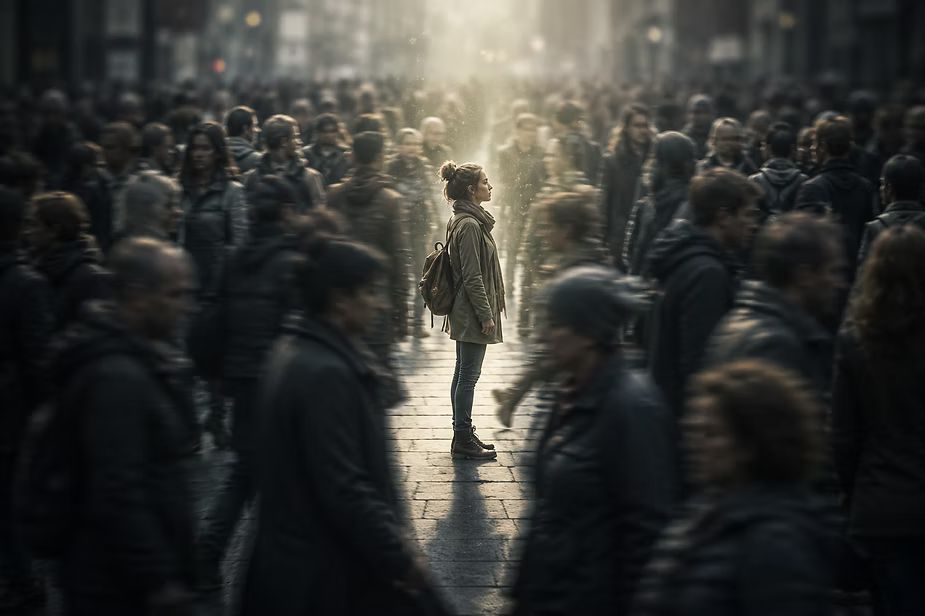
This month, create a small Tishrei practice. Choose one place in your home as a threshold a doorway, a window, a table, or a quiet chair. Each morning, stand there for one minute before reaching for your phone.
Take three slow, ordinary breaths. Look at the light. Name one thing you are grateful for. Then ask: Jesus, what are You inviting me to notice today? Do not force an answer. Notice what rises. At the end of the day, ask another question: Where did I encounter the presence of God today that I almost missed? Write down one sentence. Over time, these small acts of attention become more than notes.
They become memory, and memory is part of formation. We become shaped by what we remember, what we rehearse, and what we repeatedly bring before God.
Tishrei reminds us that time is not merely something we spend. Time is something we inhabit. Every beginning is also an invitation to return, return to presence, return to truth, return to gratitude, return to the God who was already there before the calendar turned. What would it mean to begin this season not by asking, "What must I accomplish?" but, "What am I being invited to behold?" And what might God reveal when you allow your attention to become an altar?
A PRACTICE FOR TISHREI
Set aside five minutes at the beginning and end of each day. At the beginning, ask what God is inviting you to notice. At the end, record one moment of grace, one moment of tension, and one moment in which you sensed beauty. If this reflection gives language to something you have been sensing, share it with a friend who may also be standing at a threshold.
May the Light of Christ teach you to receive time as a place of encounter, not merely a container for activity.
TanYah |
El-Nahara